Innovative Solutions for Specialised Shipping Challenges
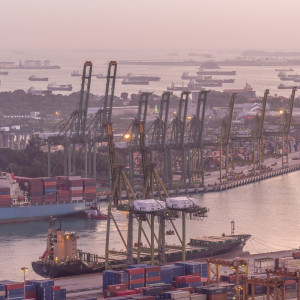

The boom of globalization and online shopping ushered in a new era of complex and specialised shipping. There is a growing need to transport oversized equipment, temperature-sensitive medications and hazardous materials. Volume-based logistics are insufficient to answer these modern demands.
Transport and logistics leaders face challenges across the entire process, from managing risk and ensuring strict compliance to controlling costs and meeting client expectations. Solving these specific hurdles can be done by moving away from traditional shipping methods into one that embraces technology, data-driven planning and collaboration. Here are the most impactful and innovative modern solutions that are carving out the future of specialized transport.
1. Using Advanced Data Analytics and IoT for Real-Time Visibility In 2023, the country reached £2.3 trillion in business logistics costs, equivalent to approximately 8.7% of its nominal Gross Domestic Product.
There is a growing demand for transporting goods worldwide. As this demand rises, so does the complexity of the process. Consumers and businesses want constant updates and timely deliveries regarding their cargo.
The most advanced specialized shipping operations utilize a live, digital replica of a shipment’s journey to ensure proactive control. IoT sensors are integrated with the cargo for a livestream of crucial shipping information, such as internal temperature, humidity levels, g-force impacts from shocks and tilt angles. These factors ensure the cargo remains in prime condition.
Live data is fed into predictive analytics engines. Logistics professionals can detect negative trends early, such as slow temperature creep or minor but consistent vibrations. These abnormalities are then issued alerts to ensure compliance.
For example, refrigerated trucks with rising internal temperatures can be rerouted or the driver can check cooling units. Effectively, situations are solved before they become problems. 2.
Implementing Blockchain for Unbreakable Transparency and Compliance Over half of all significant operational disruptions led to £100,000 in financial losses, with 16% of accidents costing upward of £1 million, so it’s essential to have a verifiable chain of custody, especially for high-value or regulated shipments. Blockchain technology provides a singular source, with information being cryptographically secured against tampering.
The technology creates a distributed, digital ledger. Every transaction and hand-off is recorded and linked to the previous one. The time-stamped history of the shipping journey is then unchangeable.
The ledger is shared among authorized stakeholders, including the shipper and carrier, customs officials and the end customer. Issues and irregularities can be more easily spotted during operational disruptions. Attempts to change the record are visible to all parties, preventing fraud and creating a high level of trust.
As a result, supply chains become more transparent and resilient. 3. Strategic Planning for Heavy and Oversized Equipment Transport
The success or failure of transporting heavy or oversized equipment depends on planning that is front-loaded before the cargo even moves. Detailed route surveys can be used to identify and reduce physical obstacles and arrangements can be made for pilot cars and police escorts. To have an effective plan, every minute detail needs to be considered.
Professionals should check the equipment’s dimensions and weight to find the most suitable transport vehicle. After this, the route selection and permits can be prepared. Some of the most important planning checklists to include are transport regulations, timelines for multi-jurisdictional permit applications and data-driven contingency plans.
These factors are crucial to ensure smooth operations even during infrastructure bottlenecks or adverse weather. 4. Sustainable Solutions for Specialised Cargo
The transportation industry accounted for 29% of the total U.S. greenhouse gas emissions in 2022. Sustainable logistics has long been a corporate social responsibility initiative. However, many leaders are beginning to see it as a necessity in operations.
New sustainable solutions are being made for complex, specialized shipments. One significant innovation is temperature-control packaging, which reduces reliance on active cooling systems that consume a lot of energy. Instead, reusable, vacuum-insulated containers can maintain strict temperature ranges without an external power source for several days.
Some logistics companies are also trying to shift to more sustainable shipping materials, such as biodegradable and plant-based insulation material in place of traditional Styrofoam. AI-powered route optimization software can be programmed to consider sustainability. Platforms calculate the best route to save time and minimize mileage, so trucks can avoid high-congestion zones and keep engine idle time low.
As a result, the shipment’s carbon footprint is significantly reduced. On a larger scale, logistics companies can significantly mitigate their fleet’s carbon footprint and operating expenses using these platforms. 5.
The Rise of Robotics and Automation in Specialized Handling Automation and robotics are used to reduce human errors and risks. Leaders can be assured of safety compliance and process consistency.
Autonomous Mobile Robots are being used to transport materials that are unsafe or unfit for human handling. Robots can handle cargo that is too heavy, delicate or hazardous in warehouses, transfer facilities and other controlled environments. They can help minimize product damage.
Robotic arms are also useful for precision tasks, such as loading medicines into temperature-controlled containers. These tasks are consistently repeated with high precision, ensuring quality control for every action. 6.
On-Demand Warehousing and Cross-Docking Platforms In 2023, around £1.57 trillion worth of goods were transported between the United States and its neighboring countries. These specialized shipments were all expected to be delivered on time, and supply chain agility has never been more critical.
On-demand logistics platforms can manage these specialized shipments flexibly without the need for a high up-front cost. Cross-docking platforms allow companies to find and secure specialized warehouse spaces, including temperature-controlled or high-security facilities. These bookings can be done on a short-term and transactional basis.
This capability is especially important in situations such as market disruptions or emergencies. For example, logistics leaders can establish a temporary distribution hub near project sites. They can also deploy cross-docking facilities to quickly reroute sensitive shipments.
All of these actions can be done without significant investments in owning or leasing a warehouse space. 7. Advanced Employee Training through VR and AR
These technologies are only effective as long as the personnel using them are sufficiently trained. Immersive technologies, such as virtual reality (VR) and augmented reality (AR), can facilitate advanced employee training. VR is great for learning high-stakes tasks.
A logistics employee can learn a great deal from simulated situations, such as operating loading machinery or responding to a hazardous material spill. These are all done within the confines of a safe and controlled environment. AR becomes important during actual work.
Technicians wearing AR glasses can view digital information overlaid on specialized shipping containers. They may see maintenance history, step-by-step inspection instructions or checklists to be completed before departure. When proper procedures are put in place, the work becomes more efficient.
Staying Ahead in a Complex World Innovators in the shipping industry stay ahead of the curve by employing new technologies, utilizing predictive analytics and ensuring deep domain expertise. Adopting these solutions can help reduce risk while improving efficiency, both of which are extremely important for remaining competitive.
Professionals also need to master and address the growing complexity of the modern supply chain.
Turning the most difficult challenges into opportunities for competitive advantage can ensure that shipping and logistics companies maintain a lasting presence in the industry.
Transport & Logistics Magazine – Driving The Industry Forward