Driving tips to cut fuel costs as UK petrol prices rise
Motorists are being alerted to an imminent surge in fuel costs, with petrol predicted to reach 140p per litre within the next few days and diesel potentially escalating even further. Fuel prices have already seen a significant increase due to tensions in the Middle East, and experts are advising drivers to prepare for additional hikes at the petrol stations. Simon Williams, RAC's head of policy, said: "Average petrol and diesel prices have rocketed in the last week and are unfortunately likely to keep on rising, so the situation for UK drivers is looking increasingly bleak.
Petrol is up 5p to 137.5p and diesel up 9p to 151p a litre since the current crisis began on Saturday, February 28. "Unleaded is almost certainly going to reach an average of 140p in the next week or so whilst diesel looks highly likely to climb to at least 160p a litre. The price of diesel is increasing more quickly now than at any point since the start of the Ukraine conflict."
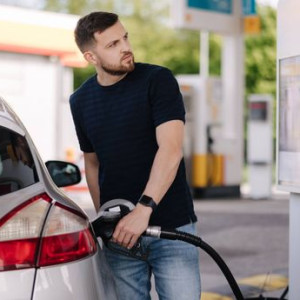
 Motorists are being alerted to an imminent surge in fuel costs (Image: Oleksandr Hrytsiv via Getty Images)
These increases have sparked accusations of profiteering by petrol retailers, a scenario that unfolded following Russia's invasion of Ukraine. Consequently, ministers and the Competition & Markets Authority have indicated they are keeping a close eye on the price escalations.
Mr Williams suggested that motorists can make minor adjustments to stretch their fuel and save money, stating: "Driving fuel efficiently by avoiding harsh accelerating and braking and ensuring tyres are inflated to the right pressures can help eke out every last mile and save money." Below are some of the most practical methods to maximise every drop of fuel. Keep your car serviced
Regular servicing is not just about preventing breakdowns. Old engine oil loses its lubricating properties over time, which makes the engine run less efficiently and use more fuel. Keeping to the manufacturer's service schedule helps maintain the car's efficiency.
Change up earlier Drivers can save fuel simply by changing gear sooner. This helps to keep engine's revs below 2,000rpm at all times, which curtails fuel use.
Read the road ahead Some drivers take fuel saving to the extreme through a technique known as hypermiling - driving in a way that squeezes the maximum miles from every gallon. Fleet manager Kevin Booker, who has set Guinness World Records for fuel efficiency, told the Telegraph[1]: "Hypermiling is about reading the road ahead so you don't have to stop or accelerate suddenly; it's all about gentle driving and judging your surroundings."
He said the technique once helped him save around GBP40 a month on a 70-mile daily commute. Combine journeys Finally, the simplest way to save fuel is often the most obvious.
Planning errands so that several tasks are completed in a single trip can reduce the number of journeys - cutting both fuel use and costs. With pump prices climbing once again, motorists who adopt even a handful of these habits could quickly notice the difference when they next fill up. Ease off the accelerator
Pressing the accelerator harder is like opening a tap - the more you press, the more fuel flows. Driving smoothly and accelerating gently can significantly reduce fuel use. If you are in too high a gear and have to press the accelerator harder to maintain speed, you may actually burn more fuel than if you were in a lower gear and using a lighter throttle.
Slow down on the motorway Speed is one of the biggest fuel burners. If you drive at 80mph on the motorway rather than 70, you'll burn about 25% more fuel because of the car's wind resistance.
Ditch the unnecessary weight Many drivers carry items in their car that they rarely use - from toolboxes to sports gear. Experts say reducing a car's weight by 5% means it needs roughly 5% less energy to accelerate, which translates directly into lower fuel use.
Take the roof box off Cars are designed to slice through the air efficiently. Adding roof racks, roof boxes or even driving with windows open at higher speeds increases aerodynamic drag, which means the engine has to work harder.
If you only need a roof box for holidays, take it off once you get home - otherwise you could be wasting fuel on every journey. Windows or air-con? It depends on speed
Many drivers wonder which is cheaper - open windows or air conditioning. Research by the Society of Automotive Engineers found that below 45mph, driving with the windows open usually uses less fuel. But above 45mph, the extra drag from open windows outweighs the energy used by the air conditioning.
Pump up your tyres Under-inflated tyres increase rolling resistance - meaning the engine has to work harder to keep the car moving. Safety charity TyreSafe says a tyre that is 6psi under-inflated can increase fuel consumption by around 3%.
Checking tyre pressures regularly can therefore save money as well as improving safety.