Why Should Electric Vehicles Compete with Fuel-Powered Vehicles in the Automotive World?
Electric Vertical Take-off and Landing aircraft (eVTOL, electric Vertical Take-off and Landing) and helicopters are like twins under the 3000 - meter sky. ?
They look similar: both can perform vertical take - off and landing (VTOL: Vertical Take - Off and Landing). They don't need runways and can take off and stand by in narrow spaces such as rooftops and squares. ?
Their missions are similar: personnel transportation, medical rescue, police patrol, and sightseeing tourism are the common flight tasks of both. But they have completely different souls ---- ?
The heart of an eVTOL is the battery and the motor, and its "blood" is electric energy. ? The heart of a helicopter is the fuel engine, and its "blood" is aviation kerosene.
They are like the "electric cars" and "fuel cars" in the sky. Starship Knowledge Manufacturing has also noticed two often - overlooked "common senses" about them ---- Firstly, with the same number of seats, compared with helicopters, most eVTOLs currently on the market are actually sold at higher prices and have shorter ranges.
Secondly, both helicopters and eVTOLs belong to the low - altitude economy. Helicopters have been flying silently for many years, but it was not until the emergence of eVTOLs that the low - altitude economy was truly "ignited". The question is, where exactly is eVTOL "better" than helicopters?
The answer lies in the question itself. Today, people no longer ask where new - energy vehicles in China are "superior" to electric cars. The former represents a systematic victory in China's "leapfrog development" in the automotive industry, and its strategic significance far exceeds the automotive industry itself.
In the sky, we also look forward to a super terminal like an "electric car" ---- its supply chain should be more controllable, and the industrial ceiling should be higher. More importantly, it should have "Chinese advantages" from the very beginning of its birth.
01
The "Price Paradox" of the Era's Darling, eVTOL
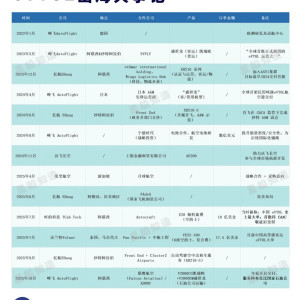
Chinese eVTOLs have accelerated their entry into the international market. The following is the "Chronicle of Chinese eVTOLs' Entry into the International Market"

Along with this, is the joint promotion of the country's major players and the capital market. The low - altitude economy has been included in the "15th Five - Year Plan" proposal and listed as a strategic emerging industry. This is the first time the low - altitude economy has entered the national five - year plan system, marking its official status as a national strategy. The "15th Five - Year Plan" proposal clearly states that it is necessary to "accelerate the cluster development of strategic emerging industries such as new energy, new materials, aerospace, and the low - altitude economy."
The National Development and Reform Commission has also officially established the Department of Low - Altitude Economy Development. The capital market has also been continuously "increasing its bets" ---- capital is highly focused on the eVTOL field. According to relevant statistical data from IT Juzi, as of August 2025, the investment and financing amount in China's low - altitude economy field reached 11.594 billion yuan.
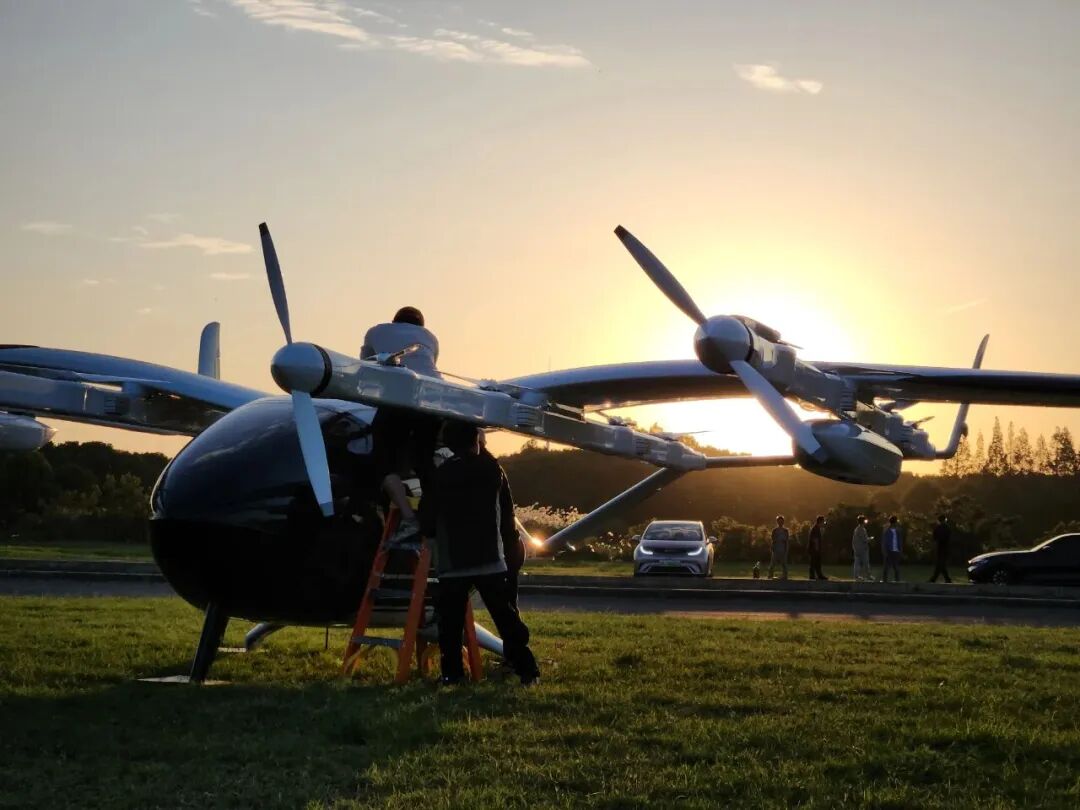
source: Yufeng Future.
Yufeng Future received a new round of hundreds of millions of yuan in financing led by the Aviation Investment Fund and participated in by multiple institutions in 2025. But readers sensitive to numbers will notice: Compared with helicopters, eVTOLs are "more expensive" and "have shorter ranges".
By making a simple comparison of several orders with disclosed amounts, for example, when comparing by the number of seats and usage, the unit price of the E20 of Shidi Technology may be around 2.85 million US dollars (about 20.5 million yuan), belonging to the 4 - seat category. The corresponding helicopter model could roughly be the Bell Bell 505 Jet Ranger X. This single - engine turboshaft helicopter can also seat 4 to 5 people ---- but its range is between 560 - 610 kilometers, and the average market price may be about 2 - 2.3 million US dollars (about 14 - 16.5 million yuan).
That is to say, the selling price of the E20 may be about 30% higher than that of a helicopter with the same number of seats, but its current range is only half that of a helicopter.

source: Shidi Technology WeChat official account Similarly, according to public information, the unit price of the Volant VE25 - 100 may be around 3.5 million US dollars (about 25.2 million yuan). This eVTOL belongs to the 6 - seat category.
When comparing by the "number of seats", a comparable model is the Airbus H125 (AS350 B3e). This single - engine turboshaft helicopter usually has 5 - 6 seats, with a range of about 640 kilometers, and the average market price is 3 - 3.2 million US dollars (about 21.6 - 23 million yuan). Once again, just looking at the selling price, the eVTOL is still more expensive than the helicopter.
And the range is also about half as short. Note: The unit prices mentioned above are estimated based on publicly disclosed total order prices and other data. The specific unit prices shall be subject to the official announcements.

source: Volant
Where exactly is eVTOL better than helicopters? In the view of Starship Knowledge Manufacturing, eVTOL has at least three obvious advantages ---- 1.
The biggest advantage is the national fortune and strategy. Understanding "where eVTOL is superior to helicopters" is also a good way to understand the strategic value of China's "strategic emerging industries". In the sky, we need a super terminal that can achieve "leapfrog development" like new - energy vehicles.
From the beginning of its development, its core supply chain must be in our own hands. At the same time, a strong and independently controllable supply chain will boost the accelerated development of this terminal. For example, when other global low - altitude economy manufacturers are facing industrial difficulties such as battery and mass production, Chinese eVTOLs will benefit from the all - round direct support of China's new - energy vehicle industry chain, domestic large - aircraft industry chain, and efficient logistics network.
2. The second advantage ---- from the perspective of industrial development trends, the current high selling price of eVTOL is an inevitable stage in the industry's development before it reaches large - scale maturity. In fact, it has dual cost advantages in manufacturing and operation.
3. The third advantage requires more imagination. For example, when comparing the "flight times" of intelligent driving with the flight limits of pilots, we will find that the various limits of eVTOL will be much higher than those of helicopters.
In short, all the current core enterprises in the eVTOL industry chain ---- CATL, Fengfei, Yufeng Future, Inovance Technology, Tuanyuan Composite Materials, etc. are simultaneously riding on two blue oceans: "the trend of the times" and "Chinese advantages" ---- The foundation of these oceans is the unique "new - energy vehicle + domestic large - aircraft" and other composite industrial systems built by China over the years. The journey of these oceans is to achieve "leapfrog development" in China's airspace.
By systematically replicating the proven electrification and intelligent industrial chains on the ground to the air, on this new track, we can once again build independently controllable industrial advantages and contribute to the development of global emerging industries. In the view of Starship Knowledge Manufacturing, the reason why the "low - altitude economy" is so commercially attractive today is precisely because the value of eVTOL goes beyond business itself. Let's take a look at these three "obvious advantages" one by one.
02
Chinese Advantages
Autonomous Control and Cross - Industry Reuse of the Supply Chain
Before judging the future value of the "new species", let's first see if the old order is really declining.
In fact, the helicopter market is also growing. According to Business Research data, the global civil helicopter market was worth 8.25 billion US dollars (about 58.8225 billion yuan) in 2024 and is expected to reach 15.46 billion US dollars by 2033. In the Asia - Pacific region, the helicopter market has not shown an obvious decline.
The "Civil Helicopter Fleet Report - YE 2024" by Asian Sky Group shows that the number of civil turboshaft helicopters in the Asia - Pacific region has reached 4,131, a net increase of 64 from the previous year. The increase mainly comes from Southeast Asia and Australia and is used for energy, medical, tourism, and public services. But at the same time, the explosion of eVTOL is even more violent.
Although eVTOL has not yet entered large - scale commercial operation, it has become the most watched growth track in the aviation industry. According to a report by Grand View Research, the global eVTOL market is expected to reach 28.6 billion US dollars by 2030, with a compound annual growth rate of up to 54.9%. The prediction of MarketsandMarkets is relatively conservative, but it also gives a market size of about 4.67 billion US dollars in 2030, with a compound annual growth rate of 35.3%.
The Civil Aviation Administration of China predicts that the market size of the low - altitude economy will exceed 3.5 trillion yuan by 2030. This means that the "growth rate" of eVTOL is almost ten times that of the traditional helicopter market.
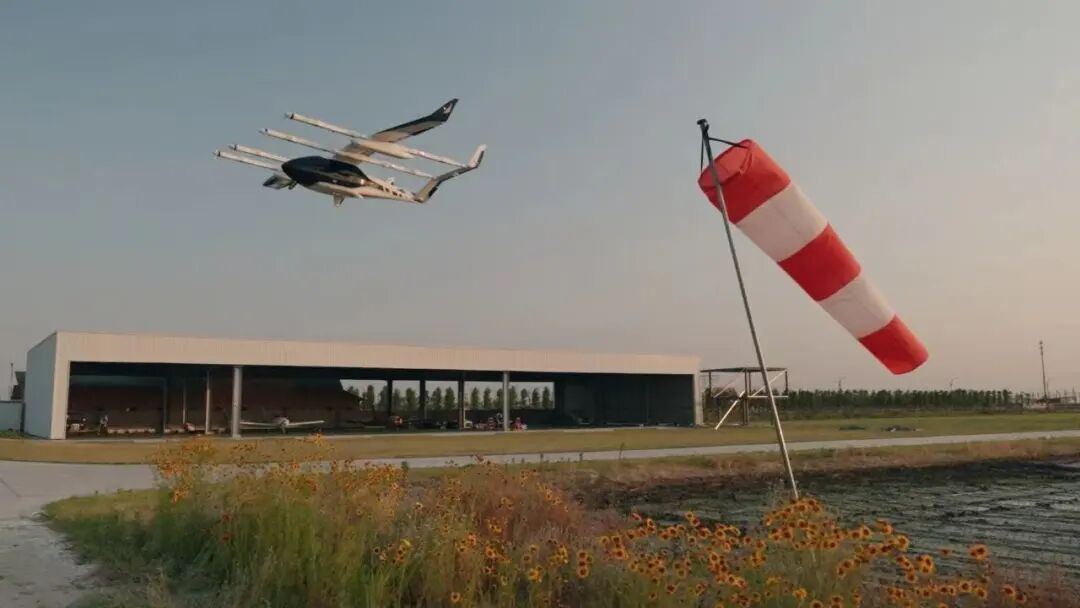
source: Yufeng Future. The M1 series of aircraft of Yufeng Future received 200 letters of intent at the 8th China International Import Expo.
From the perspective of top - level design, although we have never "equated the low - altitude economy with eVTOL" in policy, the overall policy logic is clear: The most crucial document is the "Implementation Plan for the Innovation and Application of General Aviation Equipment (2024 - 2030)" jointly issued by the Ministry of Industry and Information Technology, the Ministry of Science and Technology, the Ministry of Finance, and the Civil Aviation Administration on March 27, 2024. This is the first policy document at the national level that clearly proposes three major technical directions for low - altitude equipment.
The plan states that it is necessary to "break through key technologies such as electrification, intelligence, and unmanned operation" and proposes to "promote the airworthiness certification of new consumer general aviation equipment such as electric vertical take - off and landing aircraft (eVTOL)." That is to say, traditional helicopters have always been within the scope of the low - altitude economy. But helicopters following the "mechanical path" have indeed not been invited to the center of the "emerging industry" narrative.
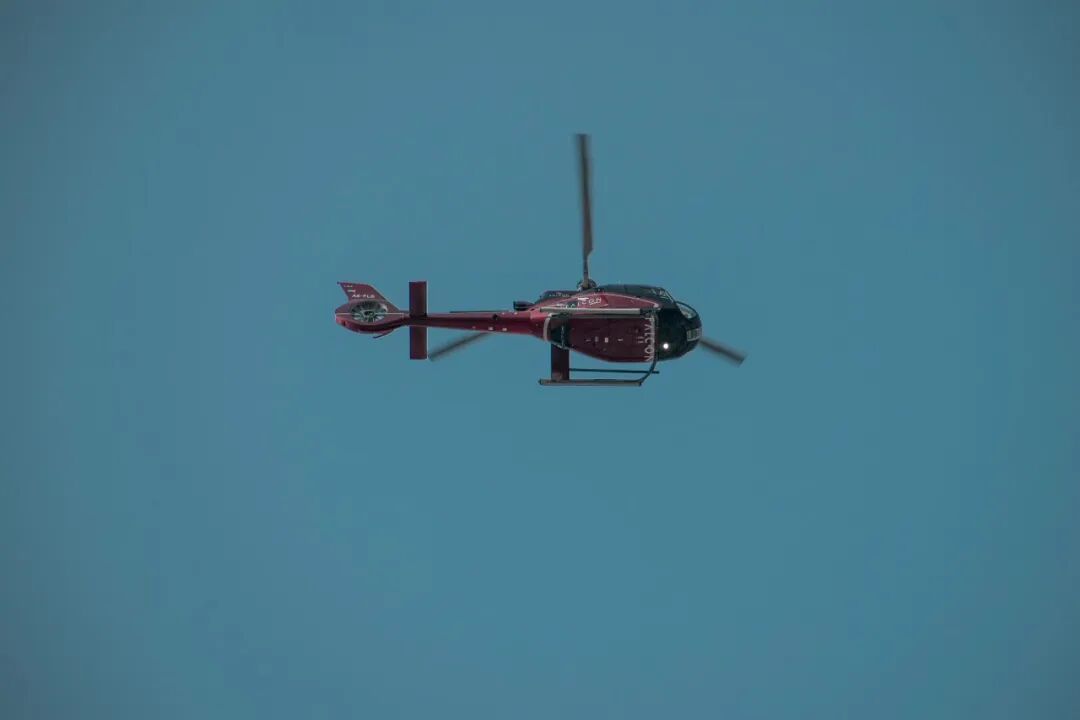
source: unsplash The underlying logic of eVTOL's "leading in a new track" is highly similar to the "leapfrog development" of new - energy vehicles ----
? The core of the traditional helicopter industry is "mechanical transmission + engine". ?
The core of eVTOL is "battery cells, electric drives, lightweight composite materials, etc." Under the numerous barriers erected by Western aviation giants, competing in the "low - altitude economy" with helicopters at the core is almost a battle in the red ocean, while developing eVTOL can give full play to blue - ocean advantages ---- the reuse and collaboration of China's more mature and independently controllable industrial chain.

source: Fengfei Aviation Last year, the New York investment institution Kerrisdale Capital released a short - selling report on Joby Aviation, the "hope of the whole village" of US eVTOL.
The report stated: "Joby claims that the savings in fuel and maintenance will make the flight cost of eVTOL only a fraction of that of a helicopter of the same class. But when battery and whole - aircraft depreciation are taken into account, the flight cost is actually higher. This is just a selective mathematical game." In other words, the low cost and high safety of US eVTOLs still remain on the engineers' whiteboards.
They have to cross real - world hurdles such as battery life and mass - production yield. If any link gets stuck, this technological narrative will end up in failure. But for China, these obstacles are precisely resolved by its own industrial structure.

???????????,36???????????????