Calls to reinstate hard shoulder on smart motorways after deadly crash
Faulty technology turns smart motorways into dangerous motorways
11:19, 26 Apr 2026Updated 11:29, 26 Apr 2026
 View 3 Images
(Image: PA)
A fatal crash on the M4, which occurred while safety warning technology[1] was offline, has sparked calls for hard shoulders to be reinstated on smart motorways in the UK.
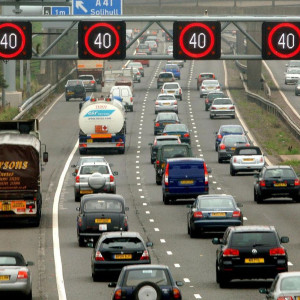
Smart motorways are UK road sections that use overhead gantries and traffic monitoring cameras to actively manage traffic flow and increase capacity without widening the road. They often utilize the hard shoulder as a live traffic lane, controlled by variable speed limits and red ‘X’ signs to close lanes during emergencies.
The debate over the viability of these road sections comes following the sentencing of a van driver involved in a fatal collision[2] that resulted in the death of a 68-year-old grandmother.
Click here[3] to hear the latest from Manchester’s courts in our newsletter
On Friday (24 April), 45-year-old Barry O’Sullivan was sentenced to six months in prison – suspended for 12 months – for causing death by careless driving in the March 2022 collision between junctions 11 and 12 of the M4 in Berkshire.
In the incident, O’Sullivan’s Ford Transit Connect van struck a stationary Nissan Micea in the fast lane, resulting in the death of passenger Pulvinder Dhillon[4].
Evidence presented during the trial at Reading Crown Court[5] revealed a critical failure in the smart motorway’s “All Lane Running” system. The system failed to alert traffic to the presence of the broken-down car.
 View 3 Images
Barry O’Sullivan leaves Reading Crown Court after he was found guilty of causing death by careless driving. (Image: Georgia Bates/PA Wire )
Furthermore, the court heard that radar technology meant to detect stranded vehicles had been non-functional on that specific stretch of the motorway for the five days preceding the crash.
Safety campaigners and motoring groups have renewed their calls for the restoration of permanent hard shoulders across the road network following the incident.
Claire Mercer, a prominent campaigner against smart motorways whose husband was also killed in a breakdown-related collision in 2019, told the Press Association that the incident proves technology cannot perform the role of a physical, always-accessible hard shoulder.
“Being so dependent on technology in an already dangerous environment,” she said. “It’s just making it much, much more dangerous.
“We’re being very laissez-faire to think: ‘Oh, it’ll be all right.'”
 View 3 Images
(Image: PA)
Motoring organizations have voiced strong agreement with this assessment.
AA president Edmund King described the collision as an avoidable tragedy, arguing that the case raises severe questions regarding systems meant to keep drivers safe.
“Once broken down in a live lane, the system is meant to use technology to alert other drivers about the stopped vehicle,” he said. “In this case, and on many other occasions, the technology just was not working.
“Of course, drivers have a responsibility to be alert to what is happening around them and in front of them.
However, faulty technology turns smart motorways into dangerous motorways, as this case tragically illustrates.”
He added: “This was a crash waiting to happen.”
Mr King argueed that the case of Pulvinder Dhillon’s death illustrates why it is “vital to end the failed experiment” of ALR schemes and urged the Government to reinstall the hard shoulder across all motorways.
Simon Williams, head of policy at the RAC, said: “The technology on a smart motorway is vital to the safety of everyone using it.
If any of it fails, then lives are put at risk.”
Article continues below
While the government cancelled all future smart motorway projects in April 2023, citing financial concerns and a lack of public confidence, the existing stretches remain in operation.
In response to the conclusion of the trial, a spokesperson for National Highways stated that the organization’s thoughts remain with the family and friends of Ms Dhillon, noting that the court has held the driver responsible for the collision accountable.
References
- ^ technology (www.manchestereveningnews.co.uk)
- ^ van driver involved in a fatal collision (www.manchestereveningnews.co.uk)
- ^ Click here (www.manchestereveningnews.co.uk)
- ^ death of passenger Pulvinder Dhillon (www.manchestereveningnews.co.uk)
- ^ Reading Crown Court (www.manchestereveningnews.co.uk)