RTX’s hybrid-electric plane is one step closer to the sky
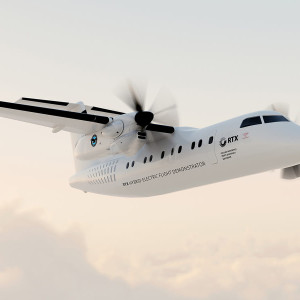

RTX's demonstrator is much larger but will rely on a modified version of H55's existing system, with more batteries and added protections at the aircraft level. Pratt & Whitney Canada built on H55's safety mechanisms with features specific to the demonstrator, including an extra fireproof box that can vent gases and flames in an emergency. It is also modular, meaning batteries can be installed throughout the aircraft to distribute weight.
By using a battery system whose baseline version is already in flight and has passed relevant European Union Aviation Safety Agency tests, Pratt & Whitney can take advantage of a system that's designed for safety and proven compliance, said Anthony D'Ambrisi, who leads design, testing and certification for H55's electric propulsion systems. "Our team has built and flown six airplanes with more than 2,000 hours of electric flight time without any incident," D'Ambrisi said. "H55 has accumulated hands-on experience in certification and airplane integration, allowing us to deliver Pratt & Whitney with a safe, efficient and certifiable product."
Advancing the unknown
H55 is a spinoff of Solar Impulse, a project that resulted in an airplane that flew around the world powered by just solar panels and batteries. That accomplishment, D'Ambrisi said, showed H55's cofounders that electric propulsion was no longer a technology of the future.
"A lot of people from the aerospace industry were thinking it will be in the far future. We see the change arriving already today," D'Ambrisi said. "I think the team here at H55 is proud to set the standard and show that this technology works well, it's safe and can be certified. It's real.
It's not just papers or presentations anymore." At RTX, the demonstrator has already marked many firsts. Teams at Collins Aerospace and Pratt & Whitney overcame many challenges as they modified the engine and electric motor and worked to integrate the two.
For example, it was the first time Pratt & Whitney had installed lithium-ion batteries in a test cell, which required building a special, ventilated cabinet the size of a small moving truck to house them. And it was the first time they had to charge a battery of its size - only there wasn't a charger on the market that could do it, so they worked with the Innovative Vehicle Institute and the National Research Council of Canada to build one. "When you think about a battery charger, you think about this little thing that charges your laptop, but for an aircraft battery, it is a big trailer where you could fit a horse," Robache said. "Now, all the big electric trucks have technology similar to us, but at the time when we wanted to do it, it didn't exist, and we didn't know.
It was part of the unknown unknown."
Now, their unknowns have turned into lessons learned that are being used to advance other electric-propulsion projects across RTX including: