Renault confirms use of China-sourced components for E7A electric motor
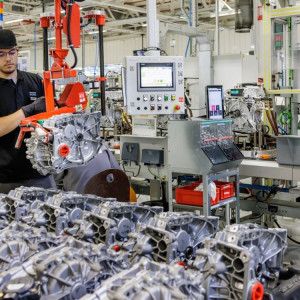

This development was reported by the French automotive magazine L'Argus and the news agency Reuters, citing a spokesperson for the car manufacturer. Renault's decision to source components from a Chinese supplier aims to reduce costs and secure its margins in the struggling European market. Specifically, the plan involves assembling the new generation of electric motors for entry-level electric vehicles at Renault's plant in Cleon, with the production line set to be installed from early 2027.
According to the trade union CGT, the production capacity is estimated at up to 120,000 motors per year.
Renault has been collaborating with Shanghai e-drive as a supplier for some time. The Shanghai-based company supplies the electric motors for the Twingo E-Tech Electric, which celebrated its world premiere in November[1]. Thanks to Chinese support, the model was developed in less than two years, as Renault emphasised during its presentation.
A key role in this process was played by ACDC, the Renault Group's research and development centre in Shanghai.
Renault's new generation of electric motors was already expected to include components from China. A few months ago, it emerged that Renault had abandoned its 2023 joint project with Valeo[2] to develop a new electric vehicle motor and instead began searching for a Chinese supplier for the stator. Reuters reported this in November, citing two sources familiar with the matter.
Renault has been producing motors without rare earth elements since 2012 and announced two years ago that it would collaborate with Valeo[3] on the third generation of electric motors. The market readiness of the unit, dubbed E7A, was initially expected for 2027. However, the partnership with Valeo--responsible for the stator in the development project--collapsed.
Instead, "the E7A engine project is no longer being done with Valeo.
It will be done entirely in-house across the entire value chain, except for the stator which could be bought from a Chinese supplier," one of the insiders told Reuters in November. The move is driven by the need to cut costs, with Chinese suppliers offering highly competitive prices.
It remains certain that the E7A will be manufactured at Renault's plant in Cleon, France. STMicroelectronics has already been confirmed as the supplier of silicon carbide modules for the E7A's inverter.
One thing is clear: Renault cannot afford further delays in development. The new motors are intended to power the next generation of compact battery-electric vehicles from Renault, which are set to launch from 2028. According to earlier statements, the unit will support 800 volts and deliver 200 kW of power--25 % more than the current generation.
By eliminating rare earth elements, the supply chain is also expected to become more resilient. Renault generally places great emphasis on value creation within France or Europe. In 2023, the manufacturer stated that the development of the E7A with Valeo was being advanced as an 'innovation Made in France.' The decision to now source the stator from a Chinese supplier reveals that Renault is reaching the limits of its localisation strategy.
The reality is clear: cost pressures are rising. As a relatively small car manufacturer, Renault cannot afford excessive dogmatism in this regard. The French company's willingness to respond pragmatically was already demonstrated in the development of the E-Twingo.
As for Valeo, the Paris-based automotive supplier continues to work with German supplier Mahle on the development of its own rare-earth-free 'iBEE" electric motor, which is expected to deliver up to 350 kW of power and launch in 2028.
We recently spoke with Valeo's Germany CEO, Holger Schwab, about this innovation and the challenges and opportunities in electromobility. Read the interview here[4].
References
- ^ celebrated its world premiere in November (www.electrive.com)
- ^ abandoned its 2023 joint project with Valeo (www.electrive.com)
- ^ collaborate with Valeo (www.electrive.com)
- ^ Read the interview here (www.electrive.net)
- ^ reuters.com (www.reuters.com)