Freeport’s Papua mine deal buys time
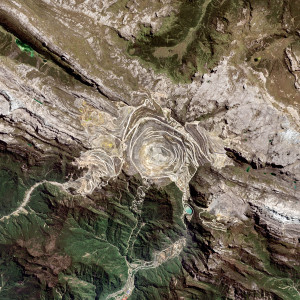

Indonesia and the US mining giant Freeport-McMoRan have struck[1] an agreement extending the operating rights of the vast copper and gold complex in Papua for the life of its reserves. The memorandum of understanding signed last week amends the special mining permit for the Grasberg mine, operated by PT Freeport Indonesia (PTFI), preserves the existing governance structure, and sets out commitments for expanded exploration spending, social investments in Papua, including a hospital and medical education facilities, continued prioritisation of domestic downstreaming, and an eventual additional 12% equity transfer to the Indonesian state. Freeport will retain 48.76% ownership, declining to roughly 37% after 2042.
On paper, the arrangement signals stability and long-term partnership. In practice, it raises deeper questions about sovereignty over strategic minerals, industrial policy and the unresolved tensions surrounding West Papua. Grasberg is not just another mine.
It is one of the world's largest copper and gold reserves. Copper is indispensable for electric vehicles, renewable power grids and digital infrastructure. As major economies scramble to secure critical mineral supply chains, copper has become a geopolitical asset.
Indonesia's push for greater state participation in PTFI has always had two objectives: increase national revenue and ensure compliance with downstreaming - the requirement that minerals be processed domestically rather than exported as raw ore. Downstreaming is meant to generate[2] higher value-added activity at home: refining, manufacturing, skilled employment and technological spillovers. The new MoU advances these goals only partially.
The additional 12% share transfer is deferred until 2041, meaning that for the next 15 years Freeport retains substantial ownership and influence. Governance arrangements remain intact. While this stability reassures investors, it potentially limits Jakarta's leverage to enforce ambitious downstreaming targets if global demand pressures intensify.
That pressure is not hypothetical. The United States has sharpened its focus on securing access to critical minerals, including copper. If demand for refined or semi-processed copper rises, Indonesia could face commercial and diplomatic incentives to prioritise exports over domestic industrial development.
The MoU allows expanded marketing to the US in line with market mechanisms. Commercially sensible, perhaps - but it could complicate Indonesia's long-term industrial strategy. Downstreaming depends on processing capacity.
The £3.7 billion Manyar copper smelter complex in Gresik, East Java[3], is central to Indonesia's plans. It is meant to anchor a domestic copper value chain linking mining to manufacturing sectors such as wiring, electronics and renewable energy components. Yet capacity constraints and operational disruptions have exposed vulnerabilities.
When the smelter cannot reliably absorb concentrate, pressure builds to allow exports of raw or partially processed material. Each exception weakens policy credibility and risks returning Indonesia to a commodity-export model.
If the Gresik complex relies heavily on coal-fired power, Indonesia risks undermining both climate commitments and long-term competitiveness in carbon-sensitive markets. Jakarta therefore needs to push Freeport to optimise and stabilise the Gresik smelter.
Measurable performance benchmarks, transparent reporting and enforceable compliance mechanisms are essential. If capacity proves insufficient, the government should connect PTFI with other private firms and state-owned enterprises to build a broader downstream industrial cluster rather than relying on a single facility. Energy is another critical dimension.
Smelting is electricity-intensive. If the Gresik complex relies heavily on coal-fired power, Indonesia risks undermining both climate commitments and long-term competitiveness in carbon-sensitive markets. The government should assess and disclose the current energy mix powering the smelter and accelerate renewable installations to reduce emissions intensity.
Cleaner power would strengthen Indonesia's position in markets increasingly attentive to supply chain emissions. Yet the debate over ownership and industrial strategy cannot be separated from realities in Papua. The mine sits on the traditional lands of indigenous communities, including the Amungme and Kamoro peoples.
For decades, resource extraction in West Papua has coincided[4] with political unrest, grievances over autonomy and allegations of human rights abuses linked to security operations around strategic assets. Many Papuans argue[5] that despite the immense wealth generated by Grasberg, local communities have seen limited economic benefit while bearing environmental and social costs. Rivers have been affected by tailings disposal, and rapid economic change has strained traditional livelihoods.
Armed incidents and protests have underscored that resource governance in Papua is inseparable from questions of justice and inclusion. The MoU's commitments to fund a hospital and expand medical education facilities are welcome. But infrastructure alone will not resolve longstanding tensions.
Sustainable stability requires meaningful participation of local communities in decision-making, transparent revenue sharing and accountability mechanisms that address past grievances. Without this, economic gains risk remaining politically fragile. None of these concerns negate Freeport's technical contribution to developing one of the world's most complex mining operations.
Nor does prudent regulation imply hostility to foreign investment. But countries that have successfully leveraged natural resources into durable prosperity have paired foreign capital with firm domestic policy direction and inclusive governance. The MoU secures operational continuity and reassures global markets.
What it does not automatically secure is transformation - whether in Indonesia's industrial structure, in the decarbonisation of its mineral sector, or in equitable development for Papua. Indonesia stands at a pivotal moment. Its copper can fuel global electrification, but whether it fuels domestic industrialisation depends on how rigorously downstreaming is enforced, how partnerships are structured, and how sincerely Papuan grievances are addressed.
Stability is valuable.
Sovereignty, value creation and justice are indispensable.
References
- ^ struck (www.reuters.com)
- ^ meant to generate (www.lowyinstitute.org)
- ^ smelter complex in Gresik, East Java (industri.kontan.co.id)
- ^ coincided (www.downtoearth-indonesia.org)
- ^ argue (www.theguardian.com)