Egypt: high-speed rail ambition drives freight growth ‣ WorldCargo News
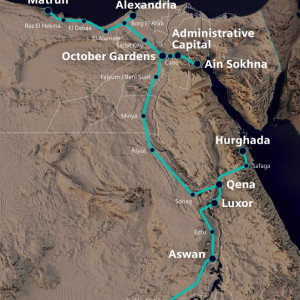
Egypt is aiming to significantly boost its rail freight capacity with the development of a high-speed electric rail network. Deputy Prime Minister and Transport Minister Kamel Al Wazir said the project will link industrial zones, agricultural production areas, and seaports, creating a logistics corridor that integrates rail, road, and air transport. The network is expected to transport 13 million tonnes of freight annually, up from the current 4 to 5 million tonnes moved by conventional rail.
The ambitions were voiced at an event held as part of the celebration marking 125 years of Siemens' presence and continuous partnership in Egypt. The high-speed lines will connect the Red Sea to the Mediterranean, linking raw material areas such as Abu Tartur, Qena, and Aswan to export ports. "The high-speed electric rail project will, for the first time, connect the coastal cities on the Red Sea with the Delta, and will reach East Oweinat and Toshka for the first time," Al Wazir said. The network is also intended to support regional development and sustainable urban growth.
Linking ports and industrial zones
The project is designed to improve multimodal connections, linking seaports, dry ports, and logistics centres with airports and road networks.
Freight transport is a key element, with the first and second lines aligning with the national "Development Corridor", a long-proposed strategic infrastructure and settlement belt running parallel and west of the Nile Valley. The network will also support exports from modern agricultural areas in the New Delta, West Minya, and Toshka to both domestic and international markets.
 Egypt HSR and Development Corridor (Siemens)
Egypt's rail freight expansion reflects wider ambitions to position the country as a regional logistics hub. With high-speed lines connecting industrial centres and ports, the network aims to increase operational efficiency, reduce transit times, and offer a more reliable alternative to road haulage. "It will link all ports together and connect industrial zones with seaports, as well as modern agricultural development areas with consumption areas and export ports[1]," Al Wazir said.
Capacity growth and regional connectivity
The high-speed network will initially span 2,000 kilometres, with plans to extend to 2,250 kilometres once a fourth line from Port Said to Alexandria is completed.
Passenger capacity is expected to double that of the existing conventional network, while freight volumes could more than double to 13 million tonnes annually. The lines will also enhance cross-border connectivity, supporting potential rail links with Sudan and Libya. The Egyptian government sees rail freight as central to achieving its 2030 transport objectives.
Previously, annual freight throughput stood at eight million tonnes, with rail accounting for 46% of the growth required by 2030, according to Siemens Mobility. Investments include 41 examples of the established Siemens Vectron locomotive[2] design, each capable of hauling up to 1,200 tonnes, along with upgrades to dry ports, new terminals, and expanded seaport capacities.
integrating tourism and regional development
While freight is the primary focus, the network will also link tourist destinations, including Hurghada, Luxor, Aswan, and Abu Simbel, creating opportunities for multi-destination travel. Al Wazir highlighted that the rail lines will connect Nile crossings, East and West Nile banks, and emerging economic zones, contributing to population redistribution and the creation of new development axes.
By combining freight, passenger, and multimodal connections, Egypt's high-speed rail network is intended to support economic growth, industrial development, and more sustainable logistics chains. "It will achieve integration with airports, seaports, and road networks to realise the concept of multimodal transport," Al Wazir said, positioning rail at the centre of Egypt's future transport strategy.
Subscribe to gain access to all news
Already have a subscription? Log in[3].
Choose your subscription
Considering a corporate subscription? Contact us[4] to find out more.
Or
Want to read this article for free?
You can read one free article per month. Enter your email and we'll send you a free link to access the full article.
No payment required.
References
- ^ consumption areas and export ports (www.worldcargonews.com)
- ^ Siemens Vectron locomotive (www.railtech.com)
- ^ Log in (www.worldcargonews.com)
- ^ Contact us (www.worldcargonews.com)