GE Aerospace tests hybrid-electric system using commercial engine for first time
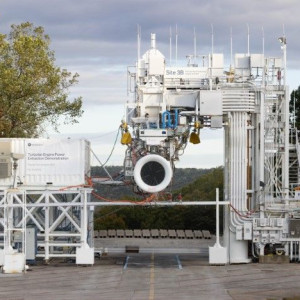

GE Aerospace has completed ground testing a hybrid-electric propulsion system that using a modified Passport turbofan engine, marking the first time the company has demonstrated the technology on a powerplant derived from a production commercial aircraft engine.
The Passport engine, which powers Bombardier's Global 7500 and Global 8000 business jets, was used to demonstrate power transfer, extraction, and injection as part of NASA's Turbofan Engine Power Extraction Demonstration project.
Testing was completed at the end of last year at GE Aerospace's Peebles Test Operation facility in Ohio.
The hybrid-electric architecture could be used on a narrowbody aircraft and embeds electric motor/generators within a gas turbine engine to supplement power during different phases of operation.
According to GE Aerospace, the design optimizes performance and creates a system capable of operating with or without energy storage such as batteries.
"Our latest milestone successfully demonstrated a narrowbody hybrid electric engine architecture that doesn't require energy storage to operate," said Arjan Hegeman, vice president of future of flight for GE Aerospace. "It's a critical step to making hybrid electric flight a reality for commercial aviation with technologies that meet customer needs for greater efficiency, durability, and range."
Testing exceeded NASA's technical performance benchmarks, which were based on industry input regarding engine capabilities that would provide meaningful fuel cost savings while meeting future aircraft power requirements.
The Power Extraction Demonstration forms part of the CFM International Revolutionary Innovation for Sustainable Engines (RISE) program, a technology demonstration effort targeting more than 20% better fuel burn compared to current commercial engines.
The RISE program, which is also developing an open fan engine design, has completed more than 350 tests and 3,000 endurance cycles to date, including evaluations of open fan, compact core, and hybrid-electric architectures.
GE Aerospace has been working on hybridization of aircraft propulsion for several years. In 2022, the company completed testing of a megawatt-class and multi-kilovolt hybrid-electric propulsion system[1] in altitude conditions up to 45,000ft (13,716m) simulating single-aisle commercial flight profiles.
RISE program technologies are maturing toward ground and flight tests later this decade.