Freeport British import shop navigates economic turbulence
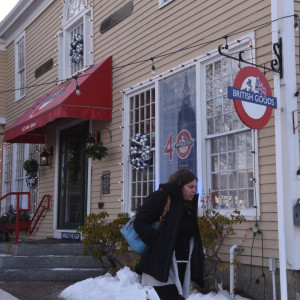
 Bridgham and Cook (The British Store) in Freeport is approaching 2026 with caution after navigating through a turbulent time with tariffs in 2025. (Paul Bagnall/Staff Writer)
Tariffs imposed last year by President Donald Trump's Administration have introduced new challenges for importers, including a small Freeport shop specializing in British Isles goods. Bridgham and Cook (The British Store) in Freeport has to be more selective about which items it ships in and find ways to prevent sticker shock to customers, according to Jay Paulus, the store's manager.
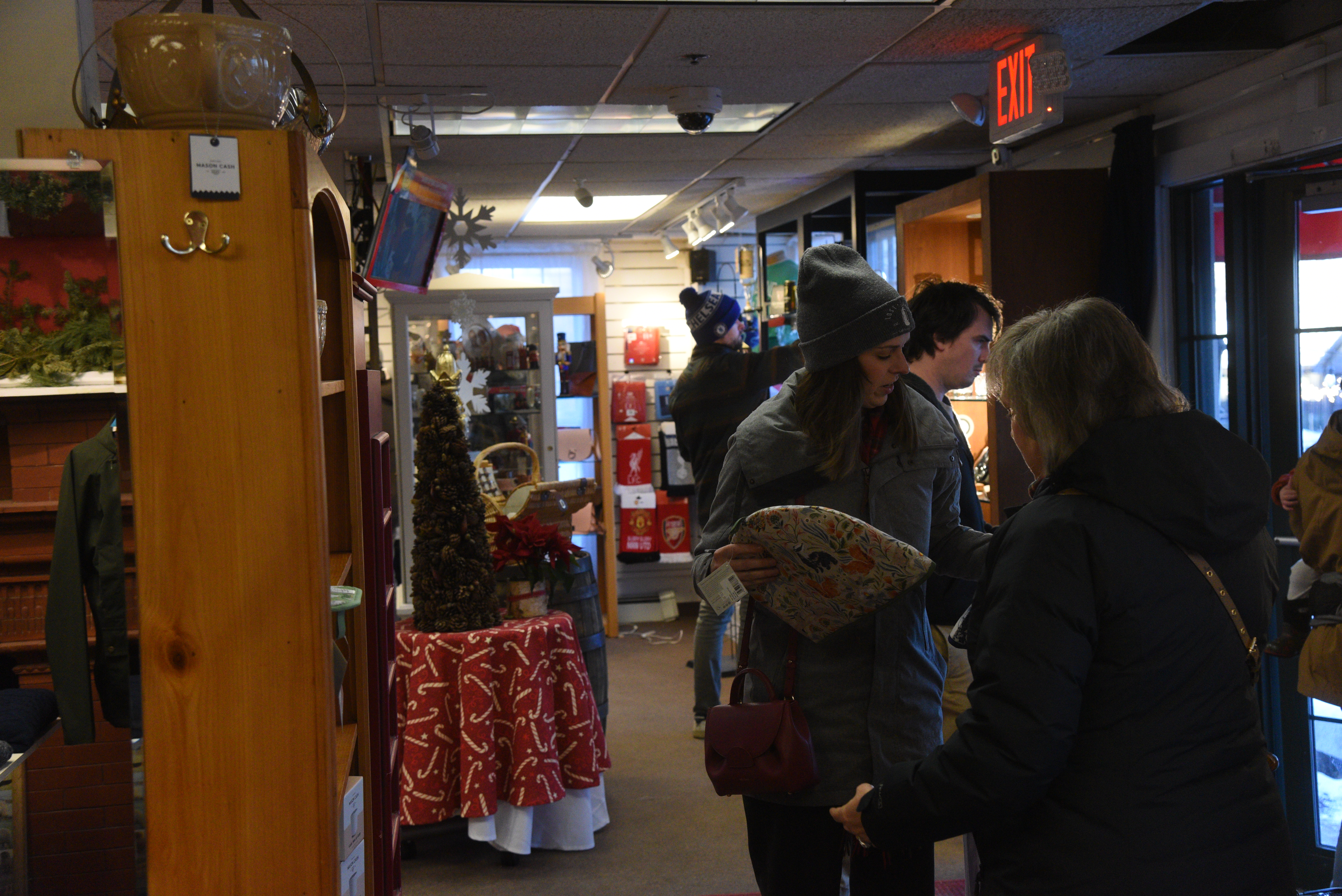 Shoppers browse through The British Store at 123 Main St. in Freeport two days into the new year as the import store is exercising caution over tariffs in 2026. (Paul Bagnall/Staff Writer)
The British Store is trying to absorb what tariff costs it can, so as not to push costs onto customers, Paulus said. One example is the steel bird feeders shaped like a British phone booth.
The shop previously paid a little over £30, selling the item for £60 in store; however, once the tariffs were in place, that cost surged to £80 and The British Store would have had to charge £120 to maintain its profit. Instead, Paulus plans to slowly sell them in the store for under £100 and won't reorder a new batch. In April 2025, the United States placed a blanket 10% tariff on all United Kingdom goods, or an 8% increase from the average of 2.2%,[1] according to the UK Parliament's House of Commons Library.
The British Store has paid the 10% tariff, but the business is also paying an additional 3 to 4%, Paulus said. He has been trying to figure out why some prices differ from others in the past while navigating through one of the big changes to U.S. trade policy with the elimination of the de minimis tax rule,[2] which exempted people from tariff costs if the goods being imported were under £800.
AdvertisementThe Freeport-based import store ships one container of goods per year. The British Store imports over 6,000 British Isle products, with 60% food products and 40% clothing and accessories.
One bright spot for The British Store was its end-of-year sales, which landed in the store's top four years, according to Paulus. He credits the favorable figures to the uniqueness of his store. "We have folks that travel every year like migratory birds, and they come up here and love their British goods," Paulus said.
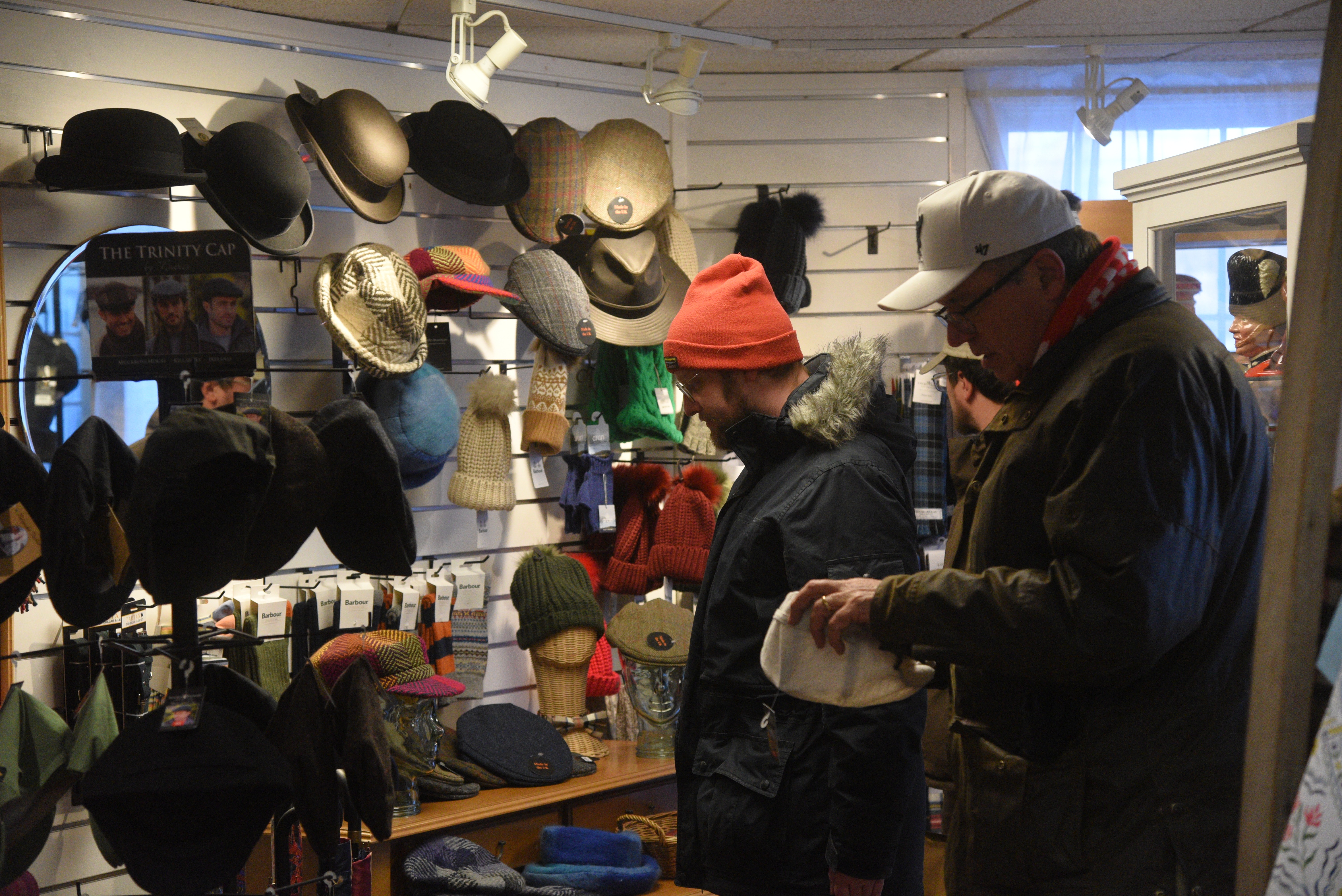 Customers browse through the clothing options at The British Store in Freeport for items they can't get from anywhere nearby, and is part of the reason the import store's year-end sales were better. (Paul Bagnall/Staff Writer)
The British Store gets 3 million people through the door each year, taking advantage of heavy tourist traffic through Freeport's downtown.
But Paulus noted a drop in sales to Canadian tourists, citing credit card sales data. Items shipped to The British Store come from Wales, Scotland, Ireland, England and Canada, but the store had to pull back on a number of items because of tariffs ranging from 15% on Irish goods to 35% on Canadian items. "Everyone that I deal with from all facets of importing is confused by what the rules are," Paulus said. "The effects are great, and I think they will become more apparent to everyone -- our customers and others -- when they start seeing it."
In 2026, Paulus thinks after the dust settles from the changes in tariffs the cost of British imported goods might come down, but there is still a lot of uncertainty in planning for the coming year.
However, his customers are unconcerned with the extra costs and still come into The British Store.
"This is our 42nd year, and it's another hiccup; it is just a more confusing hiccup," Paulus said. "I think it is a hiccup we created."
References
- ^ an 8% increase from the average of 2.2%, (commonslibrary.parliament.uk)
- ^ the elimination of the de minimis tax rule, (www.dhl.com)