Four wheels good… two wheels better? Meet Zapp, the British EV firm electrifying the urban mobility landscape
As e-bike adoption hots up across Europe, Zapp CEO, David McIntyre, explains why all-electric two-wheelers are the future of inner city mobility.
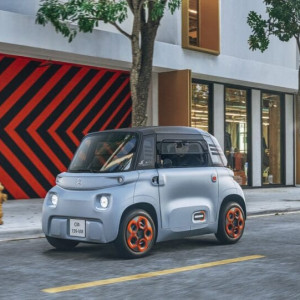
Beyond the usual headlines denoting thousands of horsepower and the Next Big Thing that will dethrone Tesla, a demand for inner-city electric vehicles is quietly bubbling away. We're not talking about the likes of all-electric buses or zero emissions trains, instead, the focus lands on 'urban mobility solutions'; think e-bikes, electric scooters, and the likes of quadricycles such as the Citroen Ami[1] and the Swiss-made Microlino[2]. 
In 2025, e-bike uptake increased significantly in Europe. E-bike experts estimate that over 10 million units will be sold across the continent by the time the year is out, and this growth rate is expected to continue during the coming years. Quadricycles are also thriving.
Since its 2020 debut, Citroen has shifted over 43,000 Amis and the European quadricycle market is expected to grow from £6.1bn in 2024 to £10bn by 2031. As the battle for urban EV supremacy simmers away in the background, Zapp[3] EV CEO, David McIntyre believes the future of inner-city personal mobility lies firmly in the two-wheel camp. To completely misparaphrase Animal Farm's Napoleon: "four wheels good, two wheels better".
Looking to the East
Zapp EV was founded in the UK in 2017, as what David describes as a "design-led, British-born EV brand on a mission to re-engineer urban mobility".
A veteran of over 30 years in the automotive industry with the likes of Aston Martin, McLaren, Bentley, and Porsche, David has spent the last 20 years of his career in South East Asia -- a part of the world, which has had untold influence on Zapp's debut vehicle, the i300.  "In Asia, the dominant mode of transport is the two-wheeler," he explains. "In Thailand, 84% of homes have at least one [two-wheeler], and in China, 80% of all [two-wheelers] sold are fully electric.
If we look at Vietnam, over 3.2m are sold each year, and its government is implementing a strategy to ban all internal combustion engine two-wheelers from Zone One in Hanoi. "Ho Chi Minh City has gone even further, and aims to remove all ICE two-wheelers from the road by mid-2027." The South East Asian model's direct influence on Zapp is the focus on zipping in and out of urban traffic without any exhaust emissions.
As David explains, despite having a focus on modern design, the Zapp i300 remains -- at its core -- an e-scooter designed to make navigating the city as easy as possible.
Freedom without compromise
"Everything we do is built around a philosophy of 'freedom without compromise," he says. "We've adopted a design-led approach to things, and built the bike from the ground up. It's aimed squarely at the urban dweller who typically goes short distances and wants to recharge quickly." Unlike a regular electric two-wheeler, the Zapp i300 eschews a large, single integrated battery pack in favour of two smaller removable 72 volt batteries weighing six kilograms each.
Combined, and paired with the bike's 14kW electric motor, they provide the i300 with a range of up to 37 miles.  The split battery strategy is designed to eliminate the fast-dying issue of range anxiety.
According to David, Zapp EV's solution is to "give people choice" about how they want to use the i300's batteries. For reference, the daily commute for a Londoner is around 16 miles. The i300's battery can be charged from 20-80% in 40 minutes, and from 0-100% in two hours.
"You can charge the battery with any wall socket, whether that be at home, in the office, or in Starbucks or something. Think of it like charging a smartphone, it's really very easy," says David.
A design for life
Alongside the GBP5,495 Zapp i300's focus on ease-of-use, David believes that the design-led approach is what separates it from rivals and similarly-priced quadricycles. "We've patented our exoskeleton structure, which allows us to get the centre of gravity low," he says. "The batteries are placed more or less right under your feet at the heart of the bike, and that makes it fun to ride.
The motor is placed low down, too.  "There are a lot of Chinese products on the market and they've just been modified from ICE to incorporate an electric motor.
What we've done is designed something from the ground up to be inherently good looking, well-riding, and very easy to charge. Ultimately though, its design is what really stands out and draws people to the product." David also believes that the i300's compact nature gives it an advantage over other "urban mobility solutions".
"When it comes to cars like the Ami, which I like very much, it still doesn't solve the parking or the charging issues," he notes. "I think quadricycles are part of the urban mobility mix, but they're still a small car at the end of the day. You can park and charge the i300 anywhere."
In search of a power boost
Despite the positive trends in the European e-mobility segment, UK e-bike adoption is one of the lowest. In 2024, 2.1 e-bikes were sold per 1,000 people, leaving the country second from last ahead of Belarus in the e-bike sales table.
As with all things EV, David feels that the shift towards all-electric two-wheelers lies firmly at the foot of the UK Government. After all, privately-owned e-scooter - such as one produced by Pure Electric - can only be used on private land. To use public roads and cycle lanes, the two-wheeler must be rented through an official electric scooter rental scheme.
Should local governments adopt a programme not dissimilar to that of Oxfordshire County Council, David sees a trickle-down effect taking place across the country, with other local councils potentially warming to larger e-two-wheeler adoption.  "I think the Government is doing a lot already, but we of course would welcome any additional policies that would get people onto two wheels, and more importantly into and onto electric vehicles.
"What we're seeing at the moment are local governments such as Oxfordshire County Council taking the initiative. What I think will happen is that cities will then watch, learn, and potentially copy from these leading locations across the UK." Whether David's prediction comes to light or not won't deter Zapp from its growth plans.
After all, there's a big market outside of the confines of the UK, and the London-based firm is resolute in its quest to disrupt the e-mobility landscape.
Another branch of EVs to look forward to
As for what's in the pipeline, the Zapp EV CEO confirms two new models. He does, though, stop short at revealing any battery tech, despite it yet again playing a significant role in the brand's future. "The i300 is our premium product, but we're aiming to bring in an e-bike for customers who don't want to get a motorcycle licence, wear a helmet, or even have the performance of the i300.
 "Our third product will be another scooter, but with a more conventional -- but still striking -- design, plus possible different battery solutions." It's not just Zapp EV pursuing the design-forward e-scooter route as the future of electrified urban mobility.
The Nico Rosberg-backed Infinite Machine made its European debut at EICMA 2025, where it unveiled its Olto and P1 models.
Looking to 2026, it looks as if the EV world will treated to yet another exciting addition in the form of e-two-wheelers.
What was that about electric vehicles being boring again?