EU’s transport transition stumbles on implementation, not ideas
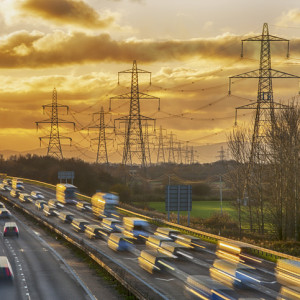

Road transport has become a stress test for Europe's credibility, as efforts to cut emissions enter a decisive phase. Considered the EU's most entrenched climate challenge, it is the only sector where emissions are rising even as electricity, buildings and industry gradually bend their trajectories downwards. Most passenger cars and nearly all trucks still run on fossil fuels[1], and with vehicle lifespans stretching well over a decade, every year of delay shapes the emissions profile of the 2030s.
The risk is no longer simply missing targets but locking in a decade of additional pollution with long-term consequences for every other part of the economy. Electrification for the win A new life-cycle assessment[2] from the International Council on Clean Transportation (ICCT) finds that battery-electric passenger cars sold in the EU already outperform petrol and diesel vehicles on emissions, even when accounting for manufacturing and the current electricity mix.
As the power sector decarbonises further, the advantage widens - making electric vehicles a more robust long-term investment for consumers, industry and governments alike. In freight, traditionally viewed as the hardest segment to transform, the economics are shifting just as quickly. A total cost of ownership study[3] shows battery-electric trucks becoming cost-competitive with diesel across many routes this decade, especially once fuel, maintenance and charging are fully incorporated into cost comparisons.
What once looked technologically distant has become a near-term market reality. Additional academic work[4] underscores that zero-emission trucks are not only technically feasible but increasingly commercially rational. Across long-haul operations, battery-electric and hydrogen fuel-cell trucks can compete with diesel in both lifetime emissions and costs when supported by appropriate infrastructure.
Strengthening the energy system Recent research suggests that electrification brings benefits beyond the transport sector. A 2025 modelling study[5] covering 33 European countries finds that full electrification of land transport is cost-optimal even without strict climate constraints.
By coordinating electric-vehicle charging with renewable energy production, Europe can reduce the need for stationary battery storage and lower energy-system costs. The authors estimate that vehicle-to-grid flexibility could minimise investments otherwise needed to stabilise the grid. This interdependence between transport and electricity policy is often overlooked.
Electric mobility does not only depend on a clean power system; it actively helps create one. As wind and solar expand, EV charging becomes an instrument for balancing demand and integrating variable generation - a system advantage that internal combustion vehicles simply cannot offer. The costs of delay
A companion analysis[6] from the same research community highlights the risks of moving too slowly. The study finds that postponing large-scale electrification could increase system-wide costs by around EUR126 billion per year by shifting the decarbonisation burden onto buildings, industry and agriculture. These sectors would be forced to compensate for missed reductions in road transport, creating political tensions and demanding far steeper interventions later.
Concerns about the pace of Europe's transition have also been raised by its institutions. The European Court of Auditors has warned in its dedicated report[7] on electric-vehicle charging that infrastructure remains "unevenly deployed" across member states, complicating cross-border travel and undermining the EU's climate ambitions. The European Environment Agency likewise notes[8] that transport emissions continue to rise, despite reductions in every other major sector, reinforcing the urgency of structural change.
Together, these findings suggest that hesitation does not buy time - it raises costs, weakens Europe's industrial strategy and risks widening gaps between member states. From possibility to delivery The research points to a relatively clear direction: Europe does not lack technologies, pathways or economic justification for decarbonising road transport.
What remains is aligning policy delivery with scientific and economic evidence. Electrification must accelerate in parallel with the wide-scale deployment of charging infrastructure, particularly for heavy-duty vehicles. National implementation of EU regulations, including new CO2 standards and the Alternative Fuels Infrastructure Regulation[9], will determine whether the transition succeeds or stalls.
At the same time, transport policy cannot focus on vehicles alone. Urban planning, public transport and active mobility investments remain essential to reduce demand and improve accessibility. Studies consistently show that electrification, while necessary, will not on its own deliver the emissions cuts required for 2030.
Europe faces a strategic choice. The evidence points to a pathway that is technologically mature, economically rational and systemically beneficial - provided it is pursued with urgency. Whether the EU seizes that opportunity will shape not only its climate trajectory, but also its competitiveness, energy security and social cohesion in the years ahead.
(BM)
References
- ^ fossil fuels (www.acea.auto)
- ^ life-cycle assessment (theicct.org)
- ^ total cost of ownership study (theicct.org)
- ^ academic work (www.sciencedirect.com)
- ^ modelling study (arxiv.org)
- ^ companion analysis (arxiv.org)
- ^ dedicated report (www.eca.europa.eu)
- ^ notes (www.eea.europa.eu)
- ^ Alternative Fuels Infrastructure Regulation (transport.ec.europa.eu)